Short answer: a Charleston roof is streaked for the same reason almost every Lowcountry roof is - a living cyanobacterium called Gloeocapsa magma feeding on the limestone filler blended into asphalt shingle, spreading down the slope the way water does. But the peninsula, the Old Village and the sea islands put a different set of roofs up than the suburbs do, and those roofs are what set a Charleston roof cleaning apart from anywhere else. Above downtown and the historic neighborhoods you find more slate, more standing-seam metal, more tile and more copper than you will see on a new subdivision anywhere - and those materials all punish a careless crew in different, expensive ways. On shingle, the rule is simple: never put pressure on the roof, because a wand scours the protective granules off and the roof never grows them back. On slate and metal the same caution applies for a different reason: the surface cannot be blasted without loosening a slate or scarring the seam, and a mistake on a historic roof is a repair bill that dwarfs any cleaning. Charleston humidity, harbor salt and Spanish moss dripping off the live oaks make growth aggressive, and the way to fight it is a no-pressure soft wash applied at the root and rinsed gently away - never force.
Why the streaks are not dirt, and why hosing them makes them worse
The black bands running down a Lowcountry roof are easy to misread as soot, shadow or age. They are none of those. They are a living colony of cyanobacteria living inside the shingle itself, feeding on the limestone that gives asphalt shingle part of its body. Because the organism lives in the surface and not just on top of it, it spreads along the path moisture takes down the slope, which is why the pattern follows the water: streaks run straight down toward the gutter, they gather around the valley, and they hang at the bottom of the slope where the water sits longest before it goes over the edge.
That is also why a garden hose, a power rinse or a pressure wand all fail in the same way. They remove the dark top layer but not the colony living down in the granules, so the roof goes dark again within a season - and the pressure wand does lasting harm while it fails. Water at high pressure scours the protective granular coating off an asphalt shingle, and those granules are what shield the asphalt from the Lowcountry sun, from hail and from the weather. Once they are gone they never come back; a shingle cannot regrow its armor, and a roof that has been blasted once is one step closer to replacement for the rest of its life.
Think of a roof wash here as a chemistry problem with a dwell time rather than a force problem. A no-pressure application is put on so it gets down into the organism where it lives, left to sit long enough to kill it, then rinsed away gently across the surface and down the valleys. The roof comes up clean because the growth is dead, not because anything was scrubbed off it - and since nothing was scoured, the shingle keeps the life it had left.
Charleston roofs are not all shingle: slate, metal and tile decide the method
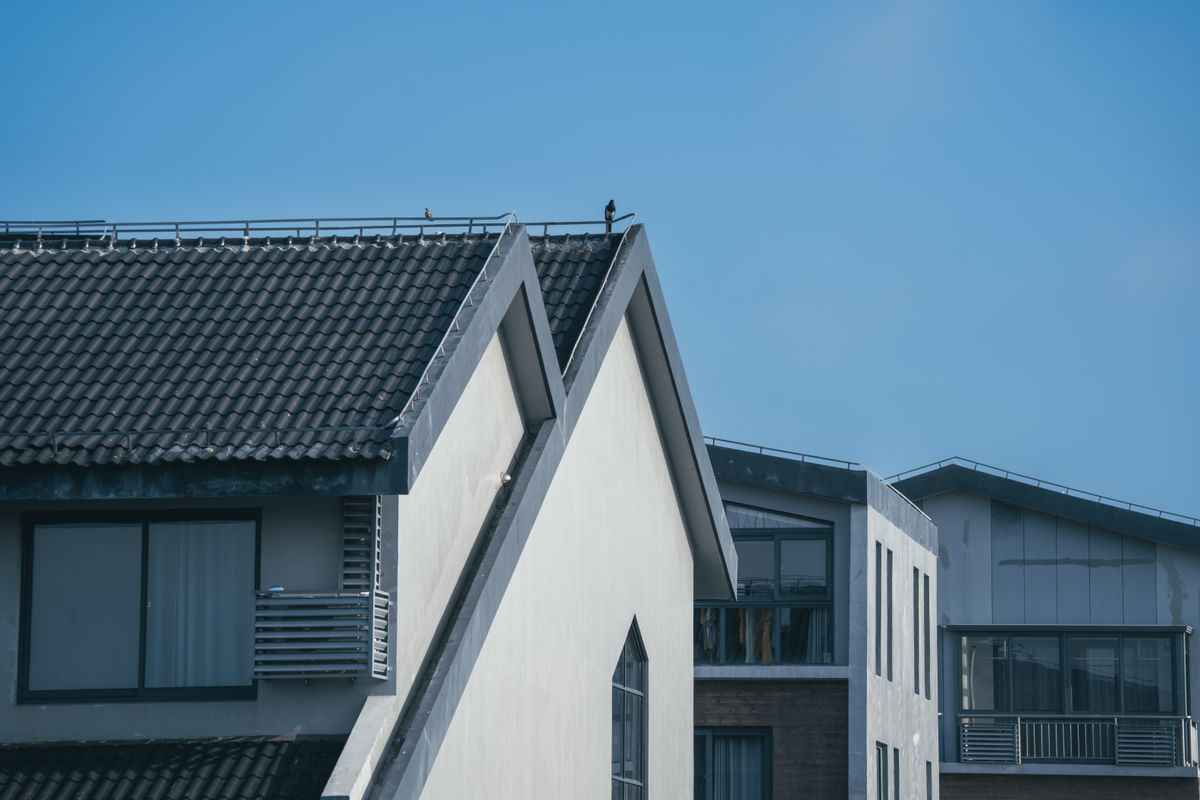
This is the part that makes a peninsula roof different from a suburban one, and it is why a one-method crew is the wrong crew here. A meaningful share of the roofs above downtown, the Old Village and the historic sea-island neighborhoods are not asphalt shingle at all. They are slate - natural stone cut into thin, overlapping tiles and hung on copper or steel nails. They are standing-seam metal - long runs of sheet steel with raised seams running vertically, common on older and more traditional properties and on a growing share of newer coastal homes that want a roof that shrugs off salt air. They are clay or concrete tile on some of the older stock. And on a good number of the best-preserved houses there is genuine copper flashing, valleys, dormers and decorative metal that weathers to a green patina over decades.
Each of those materials punishes the wrong approach in its own way. Slate is hard and lasting, but it is also brittle along its edges and seated on top of a fiber or felt layer; a pressure stream aimed up under a slate at the wrong angle can lift, chip or dislodge it, and a displaced slate on a historic roof is not a quick fix - it is a matching-and-replacement problem. Standing-seam metal looks durable, and it is, but a high-pressure stream directed at a seam can force water under the standing lock and drive it into the roof deck, and the finish on a metal roof can be scarred by grit-driven blast. Tile can be cracked by a direct hit. Copper is best left to its patina - stripping it is neither desired nor typically wanted.
Because the material decides the method, we never arrive with one setting. We walk the roof from the ground first, note what is actually up there, and match the treatment and the pressure to it. On slate, metal, tile and copper the approach is deliberately conservative: lower pressure, gentler rinse, more care around the seams, valleys and flashings, and no standing weight on the surface wherever we can avoid it. The point of cleaning a historic roof is to protect it and extend its life, not to risk it for a cosmetic result.
The historic district means preservation, not just cleaning
Much of the peninsula's work sits under the city's Board of Architectural Review, and a historic roof is part of the protected building. The standard the BAR and the preservation community apply is a preservation one, not a cosmetic one: the goal of any exterior work on a protected property is to not undo a century of building. That changes the conversation around roof cleaning in a real, practical way. We do not suggest, and we will not perform, anything on a historic roof that risks the fabric of the roof itself - no pressure that could dislodge a slate, no aggressive chemistry on soft metal, nothing that could void the warranty or the historic designation by damaging the material. The same soft-touch standard we apply to old brick, stucco and masonry holds at the roofline: the building is not replaceable, so the method is matched to it.
For the homeowner this is good news in an unexpected way. Because we treat the roof as a protected surface, the job is scoped around what the roof can safely take rather than around how fast a crew can blast it clean. That is the difference between a roof that is cleaned and a roof that is quietly one step closer to replacement, and on a historic home it is the only defensible way to do the work at all.
Spanish moss, harbor salt and the tree canopy make growth aggressive
Charleston gives a roof everything it needs to go dark quickly. The peninsula and the sea islands are draped in live oaks and sweetgum carrying Spanish moss, and that moss does two things at once: it shades the roof for long stretches of the day, and it drips onto the surface. A shingle that stays damp for days after each rain under that shade is the perfect home for Gloeocapsa - which is why the deeply shaded roofs turn visibly dark well before the ones sitting in the open sun. Add the salt that blows in off the harbor, the Ashley and the Cooper twice a day with the tide, and the moisture that holds against the granules, and you have a roof that is being colonized most of the year rather than just in the warm season.
The canopy also drops material onto the roof - leaves, catkins, acorns, pine straw and Spanish moss itself. Wet leaf litter sitting in a valley or around a penetration holds moisture against the shingle, feeds the next round of growth, and is its own slow-damage problem separate from the streaks. A proper roof visit clears the debris out of the valleys and from around the vents, pipes and skylights as part of the job, so the roof is left genuinely clear rather than clean on top of a valley still full of wet litter. Spanish moss draped over the ridge is cleared back from the penetrations and the gutters where it holds moisture, and the roof is left draining the way it is meant to.
What a proper Charleston roof visit actually includes
A roof cleaning is more than spraying a solution and rinsing it off, and the honest version of the job is worth spelling out so you know what you are paying for:
- The material is read first. Shingle, slate, metal, tile and copper each get a matched treatment. We do not quote a roof clean without knowing what is up there.
- The growth is treated at the root, never blasted off. The solution is applied at essentially no pressure so it reaches the organism in the granules, and it is allowed to dwell long enough to kill it rather than merely rinse the visible top away.
- Valleys, flashings and penetrations are worked by hand. These are where the organism hides and where the runoff concentrates, and they are also the places a wand can do the most damage - so they get the most careful attention.
- Debris is cleared. Leaves, catkins and Spanish moss come out of the valleys and off the penetrations so the roof drains freely after the wash.
- What is below and around is protected. We wet the foundation plantings first and rinse them down when the work is done, shield any windows and skylights, keep runoff out of the gutter troughs, and make sure the treatment never reaches the painted trim or the siding.
The application goes on at essentially no pressure, dwells long enough to kill the organism, and rinses off the surface and down the valleys without disturbing granules, dislodging a slate or scarring a seam. It is a slower method than a pressure pass - which is precisely why the lowball bids you will see on this kind of work are the crews that are grinding shingles rather than cleaning them.
The honest line: cleaning protects, but it is not always the right call
There are roofs where cleaning is the wrong spend, and we will tell you plainly rather than bill you to wash a roof that needs replacing. If a roof is already granule-lean and the asphalt is showing, if the slate is loose and cracked, if the metal is corroded through at a seam, or if the shingle has reached the end of its service life - which on the Lowcountry coast can come sooner than the 25-year label because salt and sun age the surface faster - then cleaning it is cosmetic at best, and in some cases it risks the roof further. We are straight about that. Our page on what roof cleaning costs in the Charleston area covers the honest ranges and the factors that drive them, and it is candid about when the money is better spent on a repair or a replacement conversation than on a wash.
The roofs where cleaning genuinely pays are the ones with life left in them: shingle that is still granule-rich but going dark, a slate or metal roof that is sound but has picked up growth and staining, a newer roof that is streaking far earlier than it should because of a shaded, moss-draped lot. On those, a proper soft wash extends the life, keeps the roof performing, and keeps the house reading clean from the curb. That is the job we are selling - not a promise to make a worn-out roof look new.
How often a Charleston roof actually needs cleaning
There is no single schedule that fits every Charleston roof, because the tree canopy decides the calendar. A roof sitting in the open with good sun on most slopes can hold for a couple of years after a clean. A roof under mature live oaks dripping Spanish moss, on the shaded side of the house, or close to the harbor where salt keeps the granules damp, can show new growth within a year and often wants a check each spring after the pollen and catkins have finished dropping. The practical trigger is visual: if the streaks have re-established toward the valleys and the gutter line, cleaning is due. Waiting until the growth has bonded for months makes the job heavier; catching it while it is light keeps each visit short, gentle on the roof, and cheaper over time.
It fits naturally with the rest of the roofline. Stripes on the gutter faces are the gutter brightening job, a haze on the glass points to window cleaning, and the walls below belong to a soft-wash house wash. Running several of these on one visit usually lands cheaper than booking them separately, yet every line stays quoted for what it really is - a roof treatment is never buried inside a house-wash price and then quietly skipped.
How the job is quoted and what stays in the number
Roof cleaning is priced flat and in advance against a named scope: the type of roof (shingle, slate, metal, tile or a mix), the size of the slopes and how many stories the eaves sit at, how much of the roof lives in shade under the canopy, and how heavy the buildup is. It is set before we start and held to, so the number does not move because a back slope turned out heavier than it looked from the street. If we turn up something a clean will not fix - a failing valley, corroded flashing, a roof that is simply at the end of its life - you hear about it before you are billed, not after, and we tell you honestly when the money is better spent elsewhere. For the honest ranges and what drives them, our Charleston roof cleaning cost guide works through the numbers line by line so you know what to expect before you make the call.